

Delving into the realm of Comparing Vinyl vs Wood Siding for New Constructions, this discussion promises to unveil key insights and comparisons between these two popular siding options. Get ready to explore the advantages, costs, environmental impacts, and more in this engaging narrative.
As we navigate through the details of vinyl and wood siding, you’ll gain a deeper understanding of what each material offers for new construction projects.
Vinyl Siding
Vinyl siding is a popular choice for new constructions due to its many benefits. Not only is it cost-effective, but it also requires minimal maintenance, making it an attractive option for homeowners looking for a durable and long-lasting siding material.
Durability of Vinyl Siding vs. Wood Siding
- Vinyl siding is highly durable and can withstand harsh weather conditions without warping, cracking, or rotting like wood siding.
- Unlike wood siding, vinyl does not require regular painting or staining, reducing maintenance costs and efforts over time.
- Vinyl siding is resistant to pests, such as termites, that can damage wood siding, ensuring a longer lifespan for your home’s exterior.
Popular Vinyl Siding Styles and Colors
- Traditional Lap Siding: Mimics the look of wood clapboard and comes in various widths and textures.
- Board and Batten: Features wide vertical boards with narrower strips covering the seams, adding a rustic charm to the home’s exterior.
- Shake Siding: Resembles the look of cedar shakes and provides a textured appearance to the house.
Wood Siding
Wood siding offers a timeless and natural aesthetic that many homeowners find appealing for their new constructions. In addition to its visual charm, wood siding also provides several advantages over vinyl options.
Advantages of Wood Siding
- Enhanced Insulation: Wood siding has natural insulating properties, helping to regulate indoor temperatures and potentially reduce energy costs.
- Customization Options: Wood siding can be easily customized with different finishes, stains, or paint colors to achieve a unique look for your home.
- Durability: High-quality wood siding, such as cedar or redwood, can last for decades with proper maintenance, giving your home long-lasting protection.
Maintenance Requirements
Compared to vinyl siding, wood siding requires more maintenance to keep it in good condition over the years. Regular tasks for maintaining wood siding include:
- Periodic painting or staining to protect the wood from moisture and UV damage.
- Sealing cracks or gaps to prevent water infiltration, which can lead to rot or mold growth.
- Cleaning to remove dirt, debris, and mildew that can accumulate on the surface.
Types of Wood for Siding
Several types of wood are commonly used for siding, each with its own characteristics and benefits. Some popular choices include:
| Wood Type | Characteristics |
|---|---|
| Cedar | Durable, naturally resistant to decay and insects, with a rich color that weathers beautifully. |
| Redwood | Similar to cedar in durability, with a lighter weight and attractive grain patterns. |
| Pine | An affordable option, though less durable than cedar or redwood, requiring more maintenance. |
Cost Considerations
When it comes to choosing between vinyl and wood siding for new constructions, cost considerations play a significant role in the decision-making process. Analyzing the cost differences and long-term implications of each type of siding is crucial to determine the most suitable option for your project.
Cost Differences
- Vinyl siding is generally more affordable upfront compared to wood siding. The materials for vinyl siding are typically cheaper, making it a budget-friendly option for new constructions.
- Wood siding, on the other hand, tends to have a higher initial cost due to the quality of materials and installation process involved. However, the aesthetic appeal and durability of wood siding may justify the higher upfront investment for some homeowners.
Long-term Cost Implications
- While vinyl siding may be cheaper initially, it is important to consider the long-term maintenance costs. Vinyl siding is low maintenance, requiring occasional cleaning, but may need to be replaced sooner than wood siding due to wear and tear.
- Wood siding, although more expensive upfront, can last for decades with proper care and maintenance. The longevity of wood siding can result in cost savings over time, as it may not need to be replaced as frequently as vinyl siding.
Factors Affecting Installation Costs
- Installation costs for both vinyl and wood siding can vary depending on factors such as the size of the project, labor costs, and the complexity of the installation process.
- Additional factors like the need for insulation, trim work, and repairs to the existing structure can also impact the overall cost of installation for both types of siding.
Environmental Impact
When it comes to choosing between vinyl siding and wood siding for new constructions, considering the environmental impact of each material is crucial. Let’s delve into the sustainability, manufacturing processes, recyclability, and disposal considerations of vinyl and wood siding.
Environmental Sustainability
Vinyl siding is often criticized for its environmental impact due to the use of PVC, a material derived from fossil fuels. The manufacturing process of vinyl siding releases harmful chemicals into the environment, contributing to pollution. On the other hand, wood siding is a renewable resource if sourced responsibly from sustainably managed forests.
Wood siding has the potential to be more environmentally friendly compared to vinyl siding.
Manufacturing Processes
The manufacturing process of vinyl siding involves the extraction and processing of fossil fuels, which have a significant impact on the environment. In contrast, the production of wood siding requires less energy and emits fewer greenhouse gases. Additionally, wood siding can be sourced locally, reducing the carbon footprint associated with transportation.
Recyclability and Disposal Considerations
Vinyl siding is not easily recyclable and often ends up in landfills, where it can release toxic chemicals over time. In contrast, wood siding is biodegradable and can be recycled or repurposed at the end of its lifespan. Proper disposal of wood siding can contribute to a more sustainable waste management system.
Closing Notes
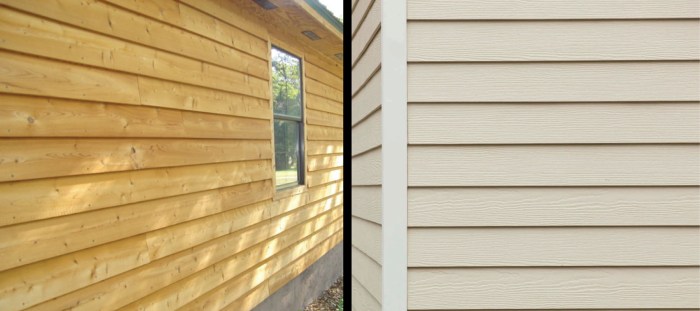
In conclusion, the comparison between Vinyl and Wood Siding for New Constructions reveals a nuanced landscape where each material has its own strengths and considerations. Whether you lean towards the durability of vinyl or the timeless appeal of wood, this exploration aims to assist you in making an informed decision for your construction needs.
Quick FAQs
Is vinyl siding more durable than wood siding?
Vinyl siding is generally considered more durable than wood siding as it is resistant to rot, pests, and moisture damage.
Which type of siding requires less maintenance?
Vinyl siding requires less maintenance compared to wood siding, as it does not need to be painted or stained regularly.
Are there significant cost differences between vinyl and wood siding?
Yes, vinyl siding tends to be more cost-effective upfront compared to wood siding, but long-term cost implications can vary based on factors like maintenance and repairs.
Is vinyl siding environmentally friendly?
Vinyl siding is less environmentally friendly compared to wood siding as it is not biodegradable and can release toxins when burned. However, modern manufacturing processes are improving sustainability.

