

Embarking on the journey of designing earthquake-resistant homes for safety and style opens up a world of innovative solutions and creative possibilities. This guide delves into the crucial aspects of creating homes that can withstand seismic activity while exuding elegance and charm.
Structural integrity, modern technologies, and interior design all play a vital role in achieving the perfect balance between safety and style in your dream home.
Introduction to Earthquake-Resistant Homes
Earthquake-resistant homes are structures specifically designed to minimize damage and protect occupants during seismic events. These homes are built with materials and techniques that can withstand the lateral forces generated by earthquakes, reducing the risk of collapse or structural failure.
Designing homes to be earthquake-resistant is crucial, especially in regions prone to seismic activity. By incorporating specific features and strategies, homeowners can ensure the safety of their families and the longevity of their properties in the event of an earthquake.
Key Elements of Earthquake-Resistant Homes
- Reinforced Foundations: Strong, deep foundations help distribute the weight of the structure evenly and prevent shifting during an earthquake.
- Flexible Building Materials: Using materials that can bend and flex, such as steel or reinforced concrete, can absorb seismic energy and reduce damage.
- Bracing and Shear Walls: Installing bracing and shear walls throughout the home can strengthen the structure and prevent collapse under lateral forces.
- Proper Roofing Techniques: Securing the roof to the rest of the structure and using lightweight materials can prevent roof collapse during an earthquake.
- Seismic Retrofitting: Older homes can be retrofitted with additional supports and reinforcements to improve their earthquake resistance.
Structural Design Considerations
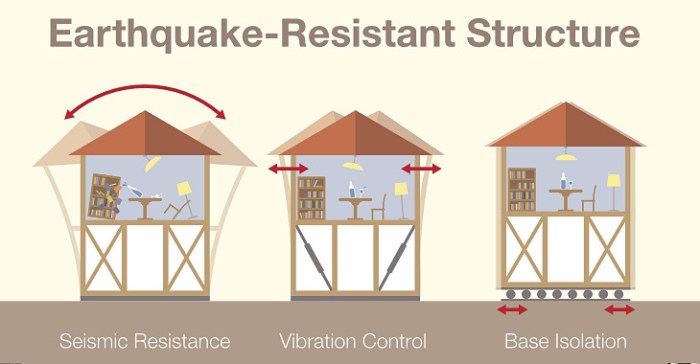
When it comes to designing earthquake-resistant homes, there are several key structural design principles that need to be considered to ensure both safety and style. One of the most important aspects is the choice of construction materials, as different materials have varying levels of resistance to seismic activity.
Additionally, foundation design plays a crucial role in ensuring the stability and resilience of a home during an earthquake.
Construction Materials for Seismic Zones
In seismic zones, it is essential to use construction materials that can withstand the lateral forces exerted during an earthquake. Some suitable materials include reinforced concrete, steel frames, and cross-laminated timber. These materials offer the necessary strength and flexibility to absorb and dissipate seismic energy, reducing the risk of structural damage.
Foundation Design
The foundation of a home is the base on which the entire structure rests, making it a critical component in earthquake resistance. A well-designed foundation should be able to distribute the weight of the building evenly and resist the lateral forces generated by seismic activity.
Techniques such as base isolation and pile foundations can help enhance the earthquake resistance of a home by minimizing the impact of ground shaking on the structure.
Innovative Technologies for Earthquake-Resistant Homes
When it comes to designing earthquake-resistant homes, modern technologies play a crucial role in enhancing safety and structural integrity. Advancements in materials science have revolutionized the construction industry, leading to the development of innovative solutions for seismic protection.
Base Isolators and Damping Systems
- Base isolators are devices that are placed between a building’s foundation and superstructure to absorb and dissipate seismic energy during an earthquake. These isolators help decouple the building from the ground motion, reducing the impact of seismic forces on the structure.
- Damping systems, such as tuned mass dampers or viscous dampers, are used to mitigate the effects of vibrations and oscillations in a building caused by seismic activity. These systems help in controlling the movement of the structure and minimizing damage.
- By incorporating base isolators and damping systems, engineers can significantly improve the seismic performance of buildings, making them more resilient to earthquakes and ensuring the safety of occupants.
Balancing Safety and Style
When it comes to designing earthquake-resistant homes, it is essential to find a balance between safety features and aesthetic appeal. Incorporating safety measures should not mean compromising on style. In fact, architectural design plays a crucial role in creating homes that are both safe and visually pleasing.
Importance of Architectural Design
Architectural design is not just about creating a visually appealing structure; it also involves incorporating elements that enhance the safety and resilience of a home. From the layout of the rooms to the materials used, every aspect of the design can contribute to the overall earthquake resistance of the building.
Stylish Earthquake-Resistant Home Designs
There are numerous examples of stylish earthquake-resistant home designs from around the world that showcase how safety can be seamlessly integrated with style. For instance, homes with open floor plans, reinforced concrete walls, and innovative foundation systems not only provide protection during earthquakes but also exude modern elegance.
The use of sustainable materials and green design principles further enhances the overall appeal of these homes.
Interior Design and Layout
When it comes to designing earthquake-resistant homes, interior design plays a crucial role in ensuring the safety and security of the occupants. By carefully planning the layout and choosing the right materials, you can create a space that is not only stylish but also able to withstand seismic forces.
Furniture Placement and Material Choices
- Place heavy furniture, such as bookshelves and cabinets, against walls for added stability.
- Opt for furniture made of lightweight and flexible materials that are less likely to topple over during an earthquake.
- Secure tall furniture pieces to the wall using brackets or straps to prevent them from falling over.
- Avoid placing heavy objects or decorations above beds or seating areas to reduce the risk of injury during a seismic event.
Designing Open Spaces
Open spaces in your home can be both stylish and safe if designed properly to withstand seismic forces. Here are some recommendations:
- Use flexible partitions or room dividers that can move with the shaking of the ground without collapsing.
- Opt for durable flooring materials like hardwood or tile that are less likely to crack or shift during an earthquake.
- Ensure that walls and ceilings are properly reinforced to prevent collapse and maintain structural integrity.
Epilogue
In conclusion, the quest for earthquake-resistant homes that blend safety with style is not just a practical necessity but also a design challenge that architects and homeowners alike can embrace. By integrating the latest advancements in construction techniques and materials, we can create living spaces that are both secure and visually appealing.
Common Queries
How can I incorporate safety features without compromising on aesthetics?
To seamlessly blend safety features with aesthetics, consider hidden structural reinforcements, such as steel beams disguised as design elements, or using impact-resistant materials in a stylish way.
What are base isolators and how do they enhance seismic protection?
Base isolators are devices placed between a building’s foundation and superstructure to absorb seismic shock waves. They help in reducing the impact of an earthquake on the structure by allowing controlled movement.
Is it necessary to consider furniture placement for earthquake safety?
Absolutely. Secure heavy furniture to walls or floors, avoid placing breakable items on high shelves, and opt for rounded furniture edges to prevent injuries during tremors.

